- Sep 13
What counts as cash before you quit
What counts as cash before you quit
People add everything they own and call it a runway. That is how a 3-month number becomes a 3-year fantasy.
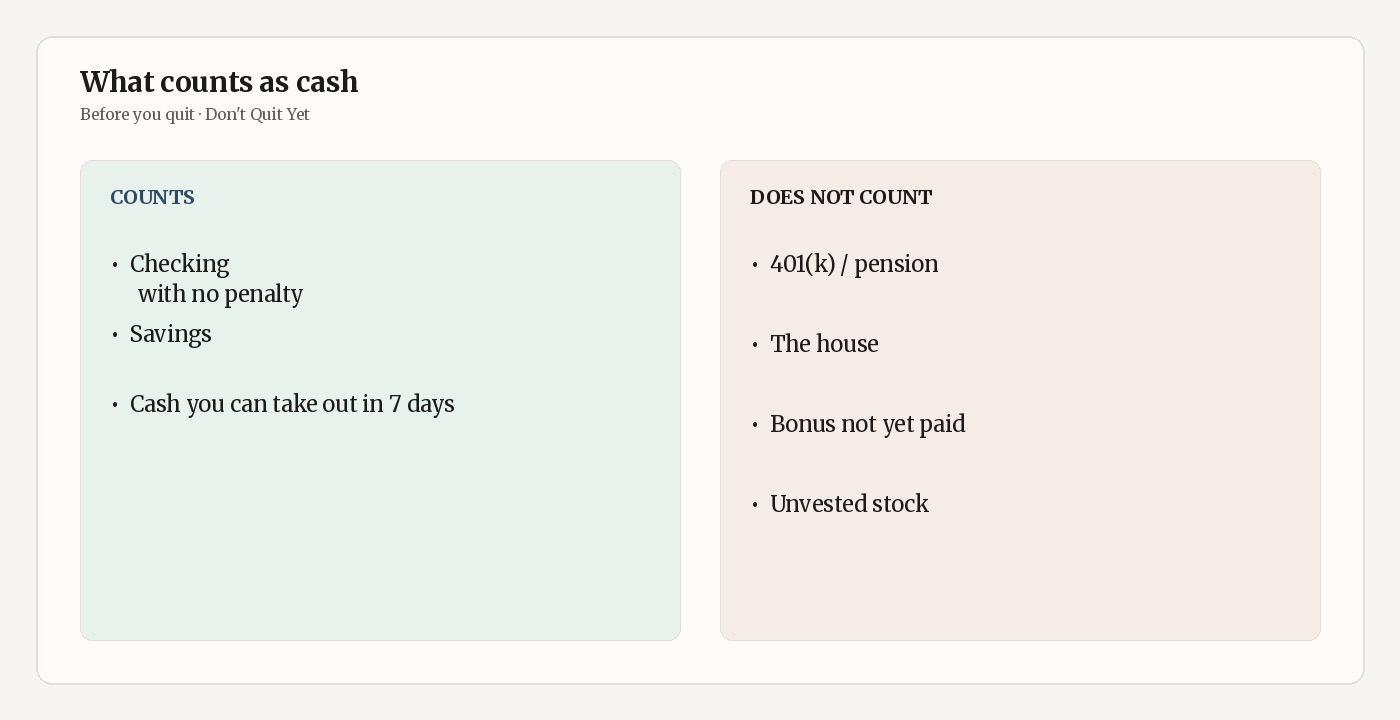
Cash, before you quit, is money you can take out in seven days with no penalty and no story. If you have to apply, wait, or sell a building, it is not cash.
What counts
Checking. Savings. A high-yield account you can empty this week. An account in your name that does not lock.
If two people share bills, only count the money that is actually available to pay those bills if you resign. A partner’s account you cannot touch is not yours.
What does not count
A 401(k) or pension. You can often take it. You will pay tax, often a penalty, and you will spend tomorrow’s floor on this month’s fear.
The house. Equity is not a month of rent until you sell or borrow. Both take time you may not have.
A bonus that has not landed. If it is not in the account, write $0.
Unvested stock. Unvested means not yours.
Crypto you would have to dump in a bad week. If selling it is a project, it is not seven-day cash.
Why people inflate the number
They want the rule to say look. So they pull in the retirement account and feel brave for an evening. The bill still arrives on the first.
Inflating cash does not change must-pay. It only changes the story you tell yourself on Sunday.
A clean test
Ask of every line: can I pay next month’s rent from this, in seven days, without a tax event and without asking anyone’s permission?
Yes = cash.
No = leave it out of the division.
What to do tonight
Open the three accounts you actually use. Write one number: the sum you could send to the landlord this week. That is the top of the formula.
Must-pay still has to be real last-month spending. Then divide. That is runway — not net worth.
The leave-or-stay sheet uses this definition. Use the same one in every essay after this.
One essay, every Saturday morning
Real talk on money, burnout, and finding meaning after leaving the corporate world.